Care
Vegan leather, nylon and PVC: what each surface asks of you
On this page
- What vegan leather actually is
- What the range is made of
- The advice that changed
- Air, heat and the shape of a shelf
- The routine, in four lines
- Nylon and quilted fabric
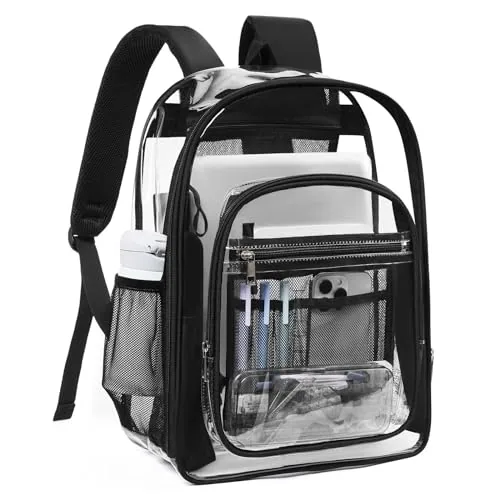
- Clear PVC
- Zips, rings and the parts that fail first
- Keeping the shape between outings
- How long any of this lasts
Four surfaces run through this range, and each one fails in its own way. Knowing which you own is most of the maintenance.
What vegan leather actually is
Vegan leather is polyurethane on a fabric backing. The grain is pressed into the coating, the colour sits in it rather than on it, and there is no animal hide anywhere in the construction.
That construction is why it wipes clean and why it does not need conditioner. It is also why it eventually cracks rather than creasing: a coating flexes until it does not, where a tanned hide keeps softening.
We use the maker's word for the material on every product page. Where the page says vegan leather, the material is a coating. Where it says leather, that is the word the maker uses, and we print it as given.
What the range is made of
| Material | Bags | What it asks of you |
|---|---|---|
| Vegan leather | 63 | Wipes clean, needs no conditioner, cracks before it creases |
| Nylon | 20 | Lightest, packs flat, snags travel along the weave |
| Not named | 19 | The maker publishes no material for these, so we name none |
| Clear PVC | 16 | Holds shape, keeps a hard crease, clouds under solvents |
| Leather | 14 | The maker's own word for these pieces, printed as given |
| Quilted fabric | 8 | Padding you feel through the wall, slow to dry |
The mix is not an accident. Vegan leather carries the pieces meant to look dressed, nylon carries the ones meant to be light, quilted fabric carries the padding, and PVC exists for gates.
The advice that changed
The instinct with any leather-looking bag is to feed it. Conservators who look after tanned leather in museums stopped doing that, and said so plainly.
“The application of leather dressings and saddle soap, as was recommended in the first edition of this CCI Note, is now not generally recommended as a treatment for leather”
That note is about tanned hide rather than about a polyurethane coating, and the difference matters. Dressings and saddle soap were meant to replace oils that a hide loses. A coating has no oils to lose, so a dressing on vegan leather has nothing to do except sit on the surface, collect dust and go tacky in a warm room.
The useful part of that finding travels across both materials. Storage and handling do more for a bag than any product you can rub into it.
Air, heat and the shape of a shelf
The same conservation note gives numbers for the conditions leather keeps best in: 45 to 55 percent relative humidity, and 18 to 20 degrees Celsius. It warns against storing leather over radiators, in damp basements and near pipes that sweat.
A house is not a store room, and nobody is buying a hygrometer for a handbag. Read those numbers as a description of an ordinary heated room that is neither damp nor baking, and then avoid the two places most bags actually live: the top of a radiator shelf and the floor of a cellar.
Heat is the one that does visible damage to a coated bag. A bag left on a car parcel shelf in July comes back with a softened, slightly sticky surface, and that change does not reverse.
The routine, in four lines
- Wipe with a cloth damp with water, then dry with a second cloth
- Keep it out of direct sun and off warm surfaces
- Stuff it lightly when it is not in use so the front panel keeps its shape
- Hang it by the strap only if the strap is wide, and otherwise lay it flat
That is the entire routine for vegan leather. No conditioner, no polish, no protector spray. A spray designed for suede on a polyurethane coating leaves a bloom that is harder to remove than the mark it was meant to prevent.
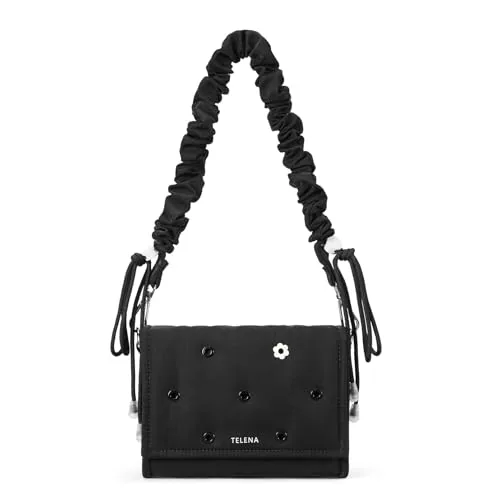
Customizable Crossbody Bag in Blackberry Bobo
Vegan leather: a damp cloth is the whole maintenance kit
$5.494.8 out of 5

Nylon and quilted fabric
Nylon takes more abuse than any other surface here and shows it least. Dirt sits on the weave rather than in it, and a damp cloth with a drop of dish soap lifts most of it.
What nylon does not forgive is a snag. A pulled thread on a woven face travels, so cut a snag flush rather than pulling it through, and do not put a nylon bag through a washing machine: the drum treats the hardware as a hammer.
Quilted bodies are the same fabric with wadding behind it. The wadding is what makes them warm to the touch and what makes them dry slowly, so give a soaked quilted bag a full day in a room with moving air rather than an hour on a radiator.
Clear PVC
Clear PVC keeps its shape without a frame, takes fingerprints, and holds a crease where it has been folded hard. Cold makes it stiff and warmth makes it pliable. A clear bag folded in a January car cracks along the fold.
Store it flat or lightly stuffed. Clean it with a damp cloth, not with alcohol or a glass cleaner: solvents cloud the surface and there is no way back from that.
PVC also yellows slowly in strong sun. A clear bag kept on a windowsill for a summer will read warmer than the one kept in a cupboard, and no cleaning reverses it.
The PVC pieces
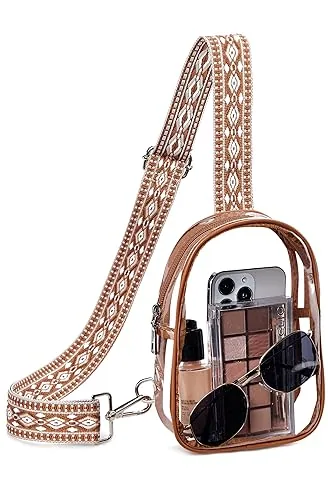
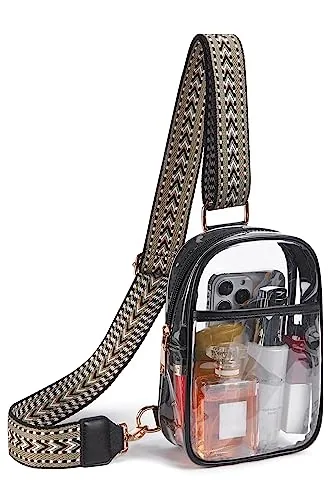
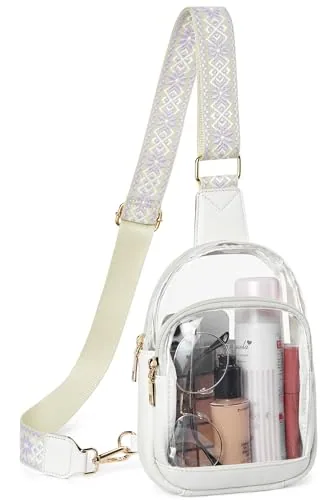
All Telena clear and stadium bagsClear bags from the Telena collection, with the measured size on every page.

Zips, rings and the parts that fail first
Bags rarely fail in the middle of a panel. They fail at the zip slider, at the ring where the strap meets the body, and at the stitch under that ring.
A zip that catches is usually carrying lint rather than breaking. Run a soft brush along the teeth, then a pencil along them, and it will move again. A slider that has spread will keep opening behind itself, and that is a replacement rather than a repair.
Check the strap rings twice a year by pulling firmly with the bag empty. It is a five second test that gives you a week of warning before a strap lets go on a full bag.
Keeping the shape between outings
A soft bag stored empty collapses, and the crease it settles into becomes permanent on a coated surface. Fill it with a rolled scarf or a cloth bag rather than with newspaper, which transfers ink to a light lining.
Do not hang a heavy bag from a thin strap for months. The strap stretches at the ring and the shape of the drop changes, which you notice the day it starts sitting an inch lower than it used to.
Dust covers do a real job and any cotton bag will serve. The point is airflow, so a plastic bag is worse than no cover at all.
How long any of this lasts
Honestly, it depends on carry more than on care. A bag worn daily in a city meets rain, a desk edge and a car door, and a coated surface shows that at the corners first.
What care buys you is the difference between a bag that looks tired in a year and one that looks used in three. That is a real difference and it costs a damp cloth and a shelf out of the sun.
The pieces that outlive the rest of a range are usually the plain ones in a mid tone. Beige shows rain marks, black shows scuffs, and brown hides both, which is not a design opinion so much as an observation from the colours that come back.
Sources, read at the page
- Care of Alum, Vegetable and Mineral-tanned Leather (CCI Notes 8/2), Canadian Conservation Institute. Read 2 September 2026. The same note gives 45% to 55% relative humidity and 18 to 20 degrees Celsius as the conditions leather keeps best in, and warns against storage over radiators and in damp basements.